
If your property is in a dense urban core or an area ripe for development, there’s a piece of crucial real estate jargon you need to know: Crane Swing and Tie-Back Rights.
Imagine this: a major developer acquires every property adjacent to yours and plans a towering high-rise. Suddenly, your modest building is not just a neighbor—it’s an essential piece of their construction puzzle. Without your cooperation, their project can become exponentially more difficult and expensive.
This is your moment of significant leverage. Here’s what you’re dealing with and how to navigate it, informed by hard-won experience.
Breaking Down the Terms
1. Crane Swing Rights
Exactly as it sounds, this is the legal right for the developer’s crane to swing its arm (or boom) over your property. This allows for efficient movement of materials high above the ground, a method that is generally safe but not without risk.
- Your Considerations: You are granting an easement over your airspace and accepting the inherent risk of accidents (e.g., falling debris). Compensation isn’t just for the “right”; it’s for the nuisance, risk, and potential operational disruption. Crucial Tip: Negotiate for a significant cash deposit (e.g., $50,000+) to be held in escrow for immediate emergency repairs should any damage occur.
2. Tie-Back Rights
When excavating a deep pit for foundations or parking, developers use a shoring system to prevent the surrounding earth—including your land—from collapsing into their hole. “Tie-backs” are long, steel tendons drilled through the shared property line into your soil, then grouted in place to anchor the shoring wall.
- Your Considerations: This physically intrudes into your property’s subsurface. The installation and presence of these ties, along with constant construction vibrations (starting as early as 6:30 AM), can cause significant disruption. It can render basement units un-leasable and drive away existing tenants. Compensation must account for this tangible intrusion and loss of quiet enjoyment.
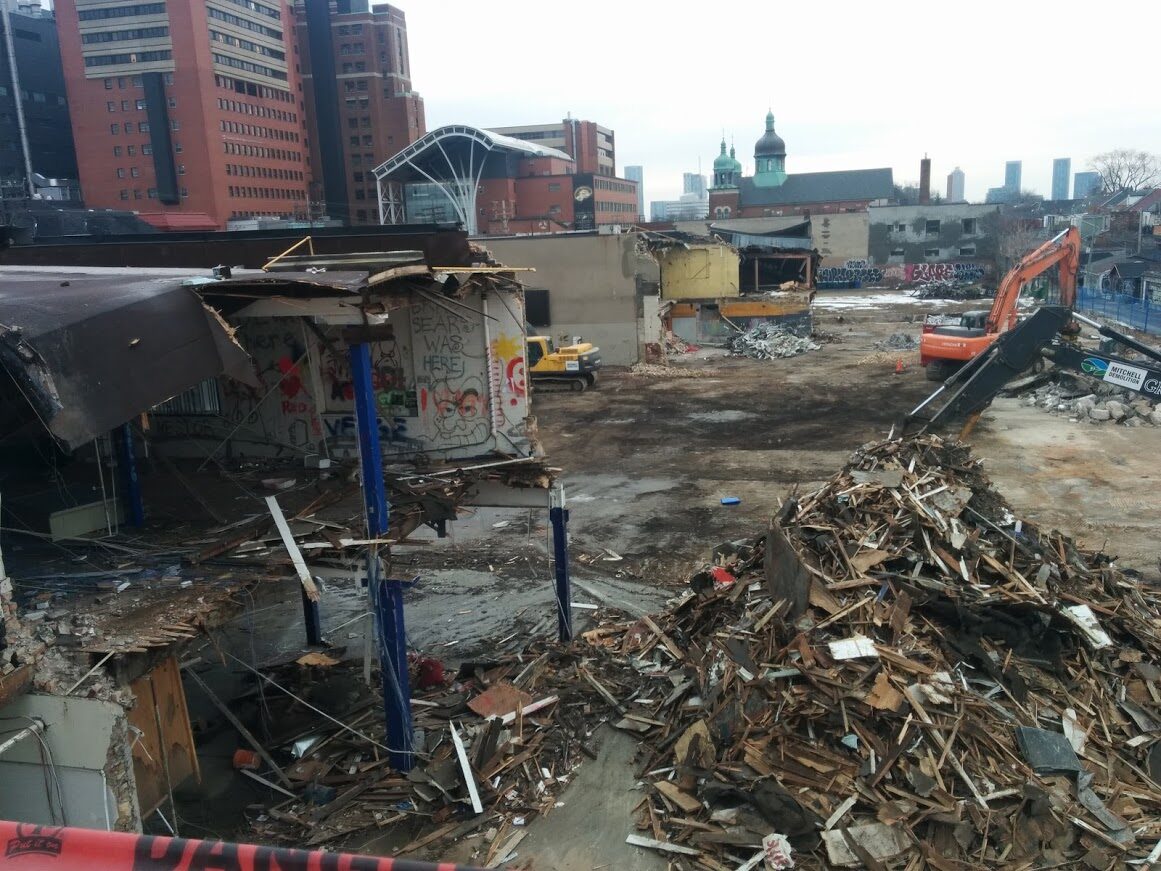
A Cautionary Tale from Bathurst & College, Toronto
We managed a property next to a RioCan development. The theory of risk became our reality:
- Their demolition crew broke a shared wastewater pipe.
- The shoring contractor then pumped fresh concrete into the excavation, which flowed into our damaged pipe.
- Result: A catastrophic backup that flooded our basement apartments.
The ensuing battle between our insurance, RioCan, and the City of Toronto was lengthy and contentious. The developer had deep pockets and no appetite for bad press, but accountability was a fight. It settled, but the stress and damage were immense.
The Negotiation Checklist: Protect Your Asset
Based on our experience, here is your non-negotiable list when entering these agreements:
- Negotiate Substantial Fees: Don’t accept token amounts. Charge significant, separate fees for both Crane Swing and Tie-Back rights. This is your primary income from the inconvenience.
- Demand an Escrow Fund: A minimum $50,000 security deposit from the developer, held in trust, for immediate emergency repairs. This is your “get it fixed now” money.
- Anticipate Tenant Fallout: Negotiate a separate compensation package for:
- Retail tenant rent abatements due to lost foot traffic and noise.
- Residential tenant disturbances or vacancies.
- Damage or permanent obstruction of your signage or wall murals.
- Insist on Independent Oversight:
- A third-party structural engineer, paid by the developer, must conduct quarterly inspections of your building and provide you with detailed reports.
- Vibration monitors must be installed on your property at the developer’s expense to log and verify disturbance levels.
- Semi-Detached Specific: If you share a wall (semi-detached), the agreement must stipulate that the developer is responsible for professionally finishing and weatherproofing the entire newly exposed exterior wall of your property.
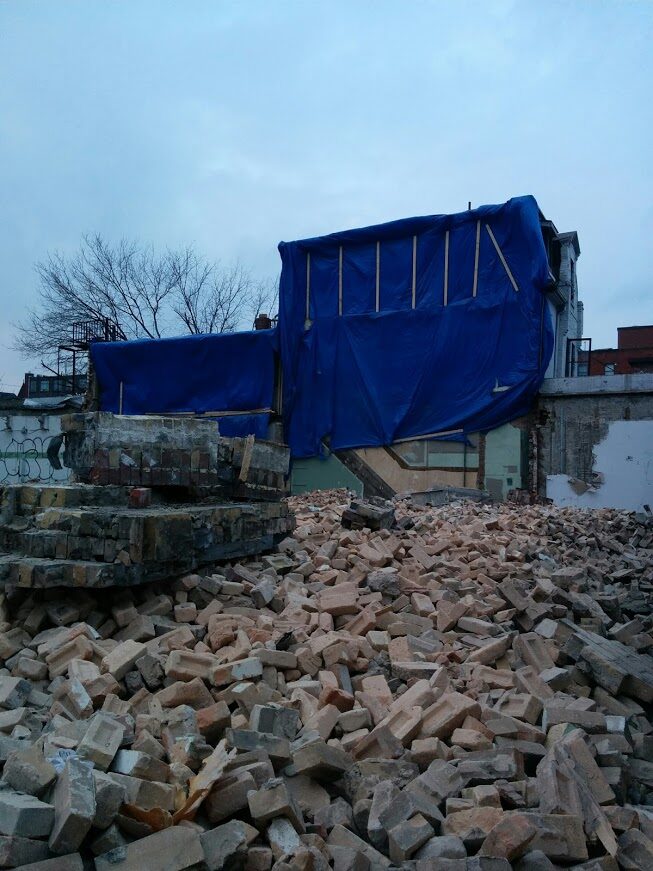
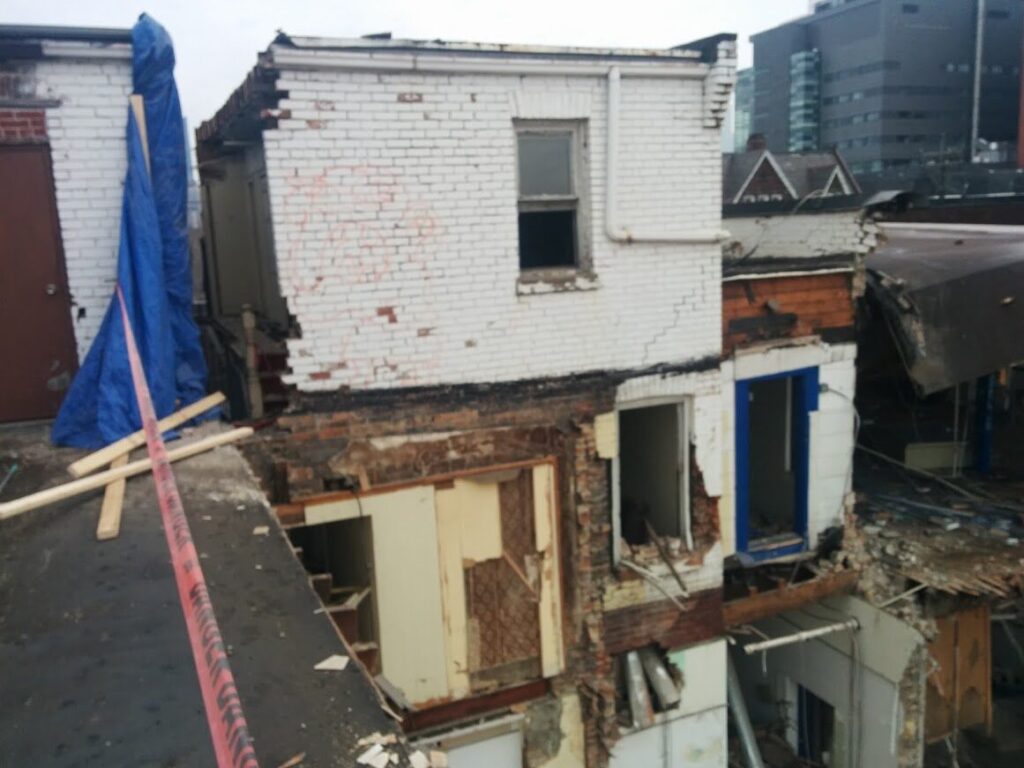
Photo Caption: Demolition next door to our managed property in downtown Toronto. As you can see, the margin for error is zero. Proximity equals risk. During this project, the construction crew scraped our exterior wall insulation in winter, leading to frozen copper pipes—another preventable “emergency” to manage.
The Bottom Line
When a developer needs your signature for these rights, you hold substantial cards. Your goal is not to block progress but to ensure your property is protected, your income is made whole, and your asset doesn’t suffer long-term harm from their short-term project.
Move slowly, hire a lawyer specialized in construction and real estate law, and get every promise in writing. The upfront negotiation is where you secure your peace of mind.
Have you been through a similar situation with a neighboring development? What lessons did you learn? Share your stories and tips in the comments—let’s build a knowledge base to empower property owners.
Leave a Reply